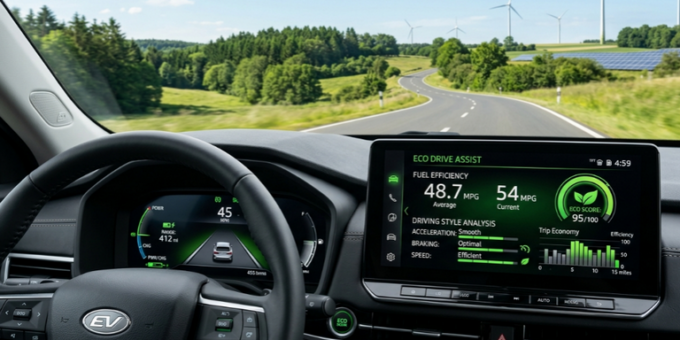
How to improve car fuel efficiency is a question many drivers ask as fuel prices rise and environmental concerns grow. Whether you drive daily for work or take long road trips, improving your vehicle’s fuel economy can save money and extend your car’s lifespan. In this guide, you’ll discover 10 proven ways that actually work.
Interestingly, just like building a passive income stream through an online business such as affiliate marketing or a dropshipping business, improving fuel efficiency is about optimizing small actions for long-term gains.
1. Maintain Proper Tire Pressure
Underinflated tires increase rolling resistance. This forces your engine to work harder and burn more fuel.
Check your tire pressure at least once a month. Use the recommended PSI listed in your vehicle manual or inside the driver’s door.
Learn more about tire safety from NHTSA Tire Safety Guide.
2. Drive Smoothly and Avoid Aggressive Driving
Rapid acceleration and hard braking waste fuel. Smooth driving helps maintain consistent energy use.
Try to accelerate gently. Keep a steady speed when possible. This simple habit can improve fuel efficiency by up to 20%.
3. Reduce Excess Weight
Carrying unnecessary items in your trunk increases fuel consumption. Extra weight forces your engine to work harder.
Remove heavy items you do not need. Even small reductions can make a difference over time.
4. Use Cruise Control on Highways
Cruise control helps maintain a constant speed. This reduces fuel waste caused by frequent acceleration.
Use it on flat highways for best results. Avoid using it on steep hills or in heavy traffic.
5. Keep Your Engine Properly Tuned
A well-maintained engine runs more efficiently. Regular servicing ensures optimal fuel combustion.
Replace spark plugs when needed. Check air filters and fuel injectors regularly.
For maintenance tips, visit Consumer Reports Car Maintenance Guide.
6. Use the Right Engine Oil
Using the correct grade of motor oil reduces friction inside the engine. This improves fuel efficiency.
Always follow your manufacturer’s recommendations. Look for energy-conserving oil labels.
7. Limit Air Conditioning Usage
Air conditioning puts extra load on your engine. This increases fuel consumption.
Use AC only when necessary. At lower speeds, consider opening windows instead.
8. Plan Your Trips Efficiently
Combine multiple errands into one trip. This reduces cold starts and short drives, which consume more fuel.
Use navigation apps to avoid traffic congestion. Less idling means better fuel economy.
9. Avoid Excessive Idling
Idling wastes fuel without moving your vehicle. Modern engines do not need long warm-up times.
If you stop for more than a minute, consider turning off your engine.
10. Upgrade to Fuel-Efficient Driving Habits
Adopting long-term habits makes the biggest difference. Consistency is key.
Think of it like building a successful affiliate vs dropshipping strategy. Small, smart decisions compound over time.
You can explore more eco-driving techniques at Energy.gov Fuel Economy Tips.
Bonus Tips to Maximize Fuel Efficiency
Use High-Quality Fuel
Better fuel quality can improve engine performance and efficiency.
Keep Windows Closed at High Speeds
Open windows increase aerodynamic drag, especially on highways.
Monitor Fuel Consumption
Track your mileage regularly. This helps identify problems early.
Conclusion
Learning how to improve car fuel efficiency is not complicated. It requires consistent habits and proper vehicle care. By following these 10 proven ways, you can reduce fuel costs, lower emissions, and improve your driving experience.
Just like growing a passive income stream through an online business, the key is consistency and smart decisions. Start applying these tips today and see the difference over time.
For more automotive guides, check our internal resource here: Car Maintenance Tips.
